


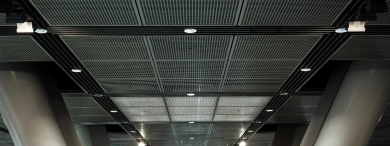
Metal roofs are an increasingly common solution in contemporary construction projects, especially in contexts where durability, precision, and technical integration are required.
Used in commercial and industrial buildings, as well as in more demanding architectural projects, they allow for a functional and controlled approach without compromising performance or aesthetics.
In this article, we analyze the main advantages, applications, and technical criteria for using metal roofs.
Used in commercial and industrial buildings, as well as in more demanding architectural projects, they allow for a functional and controlled approach without compromising performance or aesthetics.
In this article, we analyze the main advantages, applications, and technical criteria for using metal roofs.
What are metal roofs?
Metal ceilings are interior cladding systems consisting of metal panels or sheets, supported by a profile structure.
These systems are developed for:
- Hide technical installations
- Improve acoustic performance
- To ensure durability and ease of maintenance.
- Integrate with the architectural design
Beyond their aesthetic function, these systems play a relevant technical role in the organization of interior space, allowing the ceiling to be structured in a controlled manner and compatible with other specialties.
Its design must consider not only the visible finish, but also integration with infrastructure and performance requirements, particularly in terms of acoustics, functionality, and maintenance.
Types of metal roofs
Modular metal ceilings
Composed of demountable panels, they allow easy access to the installations.
Typical applications: §88bfw
- Commercial spaces
- Offices
- Hospitals
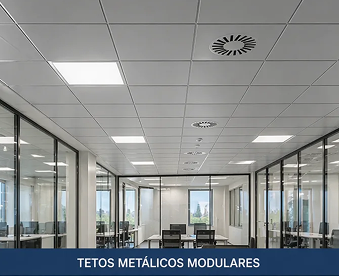
Modular Metal Ceilings
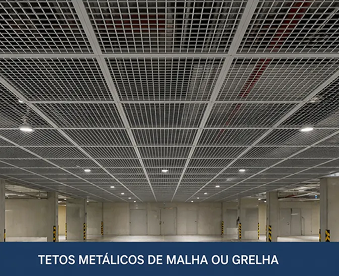
Metal Mesh or Grid Ceilings
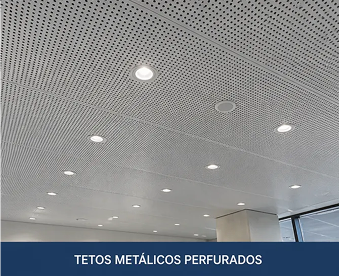
Perforated Metal Ceilings
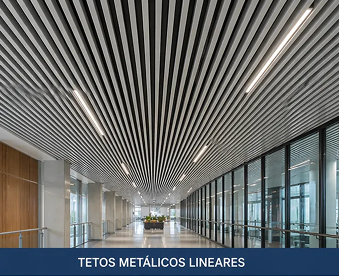
Linear metal ceilings
Composed of continuous layers, they create a more uniform visual effect.
They are frequently used in:
This type of solution is particularly suitable for circulation areas and large spaces, such as in the Arena Liga project, where linear ceilings contribute to defining the space and integrating the building's technical systems.
Beyond the uniform visual effect, linear ceilings allow for a clearer understanding of the space, creating rhythms and directions that reinforce the architectural organization.
This feature makes them particularly suitable for circulation spaces, where visual continuity contributes to the user's perception and orientation.
Its geometry also facilitates the integration of linear lighting and other technical systems, ensuring a coherent and functional result.
Perforated metal ceilings
They incorporate perforations that improve acoustic performance.
They allow:
The acoustic performance of these systems depends not only on the perforation, but also on the combination with absorbent materials in the back layer.
Properly specifying these elements allows for adjusting the acoustic behavior to the needs of the space, which is particularly relevant in environments where sound comfort is crucial, such as classrooms, auditoriums, or workspaces.
Metal mesh or grid ceilings
Used when partial visibility of the facilities is desired.
Common applications:
1. Durability and resistance
Metal roofs offer high resistance to wear and tear and intensive use.
They are particularly suitable for:
This stability reduces the need for replacements and contributes to greater system reliability throughout the building's lifecycle.
2. Ease of maintenance
Most systems allow quick access to technical facilities.
This makes it easier:
Demountable systems allow for quick and localized interventions, reducing the impact on space operations and facilitating future adaptations or reconfigurations of the infrastructure.
3. Acoustic performance
When combined with absorbent materials, metal roofs contribute to:
In addition to sound absorption, these systems contribute to improving the quality of the indoor environment by reducing noise propagation and increasing user comfort.
Its effectiveness always depends on the overall solution adopted, including complementary materials and system configuration.
4. Acoustic performance
When combined with absorbent materials, metal roofs contribute to:
In addition to sound absorption, these systems contribute to improving the quality of the indoor environment by reducing noise propagation and increasing user comfort.
Its effectiveness always depends on the overall solution adopted, including complementary materials and system configuration.
5. Technical integration
They allow for efficient incorporation of:
The ability to integrate different technical systems in an organized way is one of the main advantages of metal roofs.
This integration not only improves the functional performance of the space, but also ensures more efficient maintenance and greater flexibility over time.
6. Aesthetic flexibility
Metal ceilings can be adapted to different architectural styles.
The diversity of available solutions allows the system to be adapted to different architectural languages, ranging from more technical approaches to solutions with greater aesthetic expression.
This flexibility facilitates dialogue between engineering and architecture, allowing for the development of solutions tailored to each project.
7. Sustainability
Metal is a recyclable and durable material.
The use of metal roofs contributes to:
In addition to the recyclability of the material, the durability of metal roofs contributes to a reduction in replacements over time, which has a direct impact on the overall efficiency of the building.
Its use is aligned with a more rational approach to resources, where longevity and performance play a central role.
Composed of continuous layers, they create a more uniform visual effect.
They are frequently used in:
- Public spaces
- Atriums
- Corridors
This type of solution is particularly suitable for circulation areas and large spaces, such as in the Arena Liga project, where linear ceilings contribute to defining the space and integrating the building's technical systems.
Beyond the uniform visual effect, linear ceilings allow for a clearer understanding of the space, creating rhythms and directions that reinforce the architectural organization.
This feature makes them particularly suitable for circulation spaces, where visual continuity contributes to the user's perception and orientation.
Its geometry also facilitates the integration of linear lighting and other technical systems, ensuring a coherent and functional result.
Perforated metal ceilings
They incorporate perforations that improve acoustic performance.
They allow:
- Greater acoustic comfort
- Sound absorption
- Reverberation reduction
The acoustic performance of these systems depends not only on the perforation, but also on the combination with absorbent materials in the back layer.
Properly specifying these elements allows for adjusting the acoustic behavior to the needs of the space, which is particularly relevant in environments where sound comfort is crucial, such as classrooms, auditoriums, or workspaces.
Metal mesh or grid ceilings
Used when partial visibility of the facilities is desired.
Common applications:
- Technical environments
- Industrial spaces
- Parking lots
Main advantages of metal roofs
1. Durability and resistance
Metal roofs offer high resistance to wear and tear and intensive use.
They are particularly suitable for:
- Public buildings
- Spaces with high traffic
- Demanding environments
This stability reduces the need for replacements and contributes to greater system reliability throughout the building's lifecycle.
2. Ease of maintenance
Most systems allow quick access to technical facilities.
This makes it easier:
- Reduction of operational costs
- Maintenance interventions
- Infrastructure upgrades
Demountable systems allow for quick and localized interventions, reducing the impact on space operations and facilitating future adaptations or reconfigurations of the infrastructure.
3. Acoustic performance
When combined with absorbent materials, metal roofs contribute to:
- Greater user comfort
- Noise reduction
- Improved sound intelligibility
In addition to sound absorption, these systems contribute to improving the quality of the indoor environment by reducing noise propagation and increasing user comfort.
Its effectiveness always depends on the overall solution adopted, including complementary materials and system configuration.
4. Acoustic performance
When combined with absorbent materials, metal roofs contribute to:
- Greater user comfort
- Noise reduction
- Improved sound intelligibility
In addition to sound absorption, these systems contribute to improving the quality of the indoor environment by reducing noise propagation and increasing user comfort.
Its effectiveness always depends on the overall solution adopted, including complementary materials and system configuration.
5. Technical integration
They allow for efficient incorporation of:
- Lighting
- HVAC Systems
- Sprinklers
- Sensors
The ability to integrate different technical systems in an organized way is one of the main advantages of metal roofs.
This integration not only improves the functional performance of the space, but also ensures more efficient maintenance and greater flexibility over time.
6. Aesthetic flexibility
Metal ceilings can be adapted to different architectural styles.
- Available at:
- Different finishes
- Various colors
- Multiple geometries
The diversity of available solutions allows the system to be adapted to different architectural languages, ranging from more technical approaches to solutions with greater aesthetic expression.
This flexibility facilitates dialogue between engineering and architecture, allowing for the development of solutions tailored to each project.
7. Sustainability
Metal is a recyclable and durable material.
The use of metal roofs contributes to:
- Reducing replacements over time
- Greater efficiency in the building lifecycle.
In addition to the recyclability of the material, the durability of metal roofs contributes to a reduction in replacements over time, which has a direct impact on the overall efficiency of the building.
Its use is aligned with a more rational approach to resources, where longevity and performance play a central role.
Technical criteria in choosing the system
The selection of a metal roof should consider:

Requirements
acoustic
acoustic

Need for
access to
facilities
access to
facilities

Conditions
environmental
environmental

Requirements
architectural
architectural
Main advantages of metal roofs
Proper specification allows for:
- Compatible with different specialties
- Ensure accessibility and maintenance.
- Improve the overall performance of the space.